
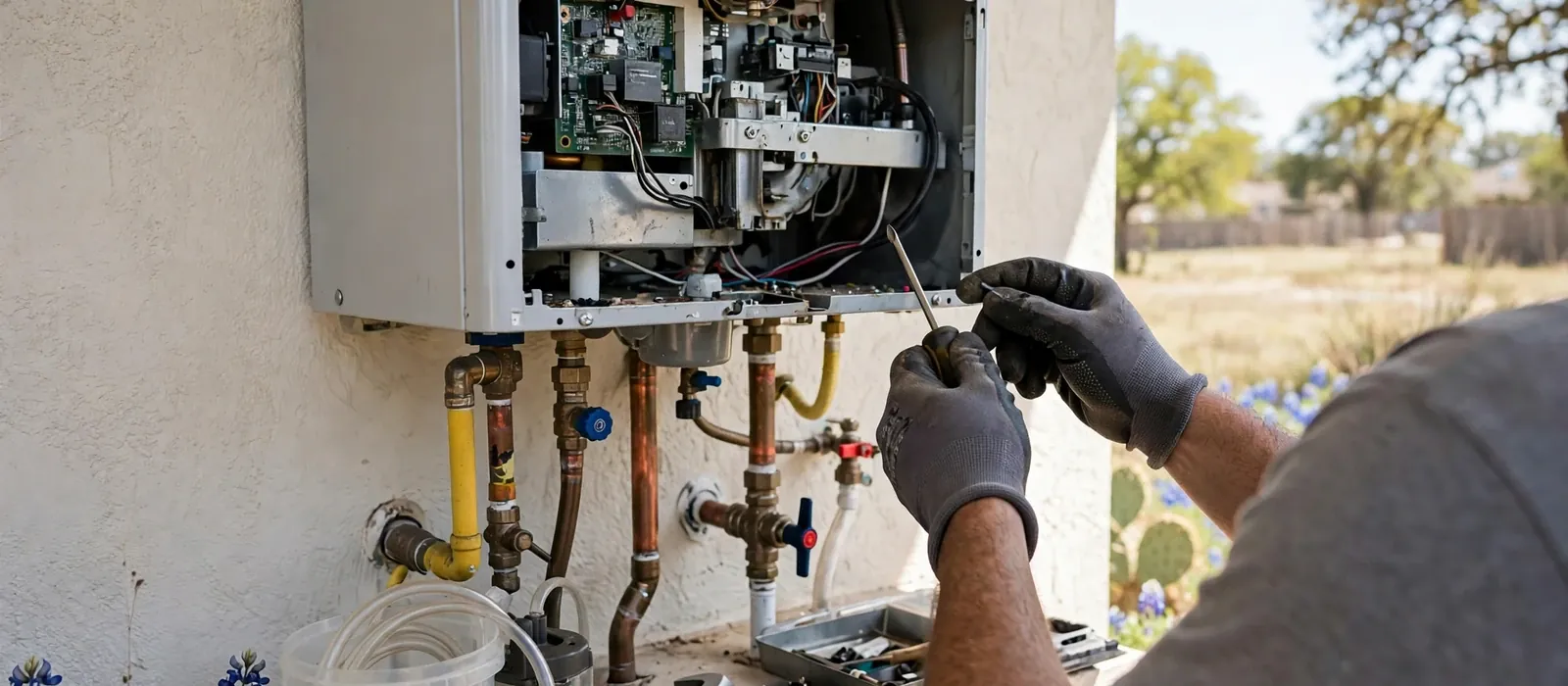
The install in one picture
A tankless install replaces the tank with a wall-mounted unit. It connects to cold water, hot water, a gas or electric supply, a vent and, for high-efficiency units, a condensate drain.
Each of those connections is a place the job can get bigger. The installer should be able to tell you before starting where each one will go and what it will cost.
Step 1: size for your busiest hour
Flow is rated in gallons per minute at a temperature rise. Winter incoming water in the Cleveland area is cold, which means a larger rise and lower flow than the brochure number suggests.
Count the fixtures that run at once at peak. A shower, a dishwasher and a laundry load together need more flow than one shower. For one-shower households, see our other guide on small-household sizing. Choose the unit for January, not July.
Step 2: check the gas line and meter
A gas tankless unit may burn several times what a tank does per hour. The gas pipe from the meter to the heater has to carry that load.
The installer measures the run, counts the fittings and checks the meter capacity with the gas utility if needed. If the line is too small, it must be upsized. That is a common reason a quote grows.
Step 3: plan the vent
Reusing an existing flue
- Sometimes allowed with a liner
- Often not for condensing units
- Check manufacturer and code
New plastic vent
- Through a side wall or the roof
- Needs slope and termination clearance
- Adds wall penetration and finish work
Ask where the vent exits and how far it is from windows and meters. Termination rules are in the manual and the code, and an inspector will look.
Step 4: condensate and the drain
High-efficiency units create acidic condensate. It must drain somewhere that can handle it, often a floor drain or a laundry tub, and sometimes through a neutralizer.
A basement with a floor drain makes this easy. Without one, a small pump may be needed.
The North Olmsted angle
The city applies the 2024 Ohio Plumbing Code, which builds on the 2021 International Plumbing Code, and it wants a permit in hand before plumbing starts. Registered contractors pull those permits and book the inspection a day ahead. The National Weather Service normals for Cleveland put the average January low near 22 degrees, which is why incoming water temperature matters when you size a unit.
Step 5: water quality and a flush port
Install isolation valves with a flush port so the heat exchanger can be descaled without cutting pipe. Hardness in the Cleveland Water system runs 105 to 130 ppm by its own reporting, and that mineral load builds scale over time.
Ask the installer to leave service valves on both lines and to show you how to flush. If you add a water softener, it protects the unit further.
Step 6: inspect and test
After the install, the plumber tests for leaks, checks combustion on gas units, runs the unit at several flow rates and confirms the temperature setting. Ask for the manual and the model number for your records.
If anything on the day does not match the quote, ask why. A change in the vent route or the gas line is a real cost change and should be explained. For the full service picture see our tankless water heater page, and for planned swaps see water heater installation.
If you are in a neighboring town
The same checklist applies in North Ridgeville and Olmsted Township, though permit offices differ. In the township, plumbing permits go through the county health board.
Mistakes that cause callbacks
The most common problems after a tankless install are not defects in the unit. They come from a gas line that was too small, a vent run that was too long, a condensate drain that was never connected or a unit that was sized for summer water.
Another source of trouble is leaving out the isolation valves, which makes the first annual flush harder and sometimes leads owners to skip it. A third is forgetting the pressure and temperature relief arrangement, which the manual specifies and the inspector checks.
What to have ready before the installer arrives
- A clear path to the water heater, free of storage.
- The model and age of the current heater, if you know them.
- The location of the main water shutoff and the gas shutoff.
- A note of which fixtures run at the same time in your house.
- Access to the electrical panel and any nearby outlets.
Good preparation shortens the visit and helps the installer give you a more accurate price. If something does not fit what the quote assumed, ask about it before work starts.
After the install: your first year
Keep the manual with the model number near the heater. Note the date of installation and the flush schedule, and keep any receipts for warranty claims. Check the unit display for error codes if hot water cuts in and out.
Flush the heat exchanger once a year, or sooner if your water is hard and use is heavy. Clean the inlet screen at the same time, since debris trapped there reduces flow and causes temperature swings.
Look at the vent and condensate drain a couple of times a year. A blocked drain or a loose vent joint is easier to fix when it is found early. If you hear new noises, smell exhaust or see water at the base, call for a service visit rather than waiting.
Choosing an installer
Ask whether the installer is registered with the city and licensed in Ohio, and whether they will pull the permit. Ask for a written scope with the vent, gas and drain details.
Be wary of a quote that arrives with no site visit. A tankless install depends on your house, and a price given sight unseen will probably change.
Safety steps before and during the install
- If you smell gas at any point, leave the house and call the gas utility or 911 from outside.
- Have a working carbon monoxide detector near the heater and the bedrooms.
- Never run a gas unit with the vent disconnected or blocked.
- Keep combustibles away from the heater and its vent.
- Ask for a combustion check at start-up and keep the report.
The install follows the maker instructions and the Ohio Plumbing Code, which is based on the International Plumbing Code (IPC).
Questions homeowners ask
Often a day. Gas upsizing or a long vent run can add time.
Often yes, but the vent and gas line may need changes. The installer checks.
The city says plumbing work needs a permit before it begins. Ask the Building Division and confirm your installer is registered.
It lets you circulate descaling solution without cutting pipes.
Most need electricity for controls even when gas-fired, so they stop without power. Ask about a backup if outages worry you.
Have a question that is not here? Call (440) 468-0237.