
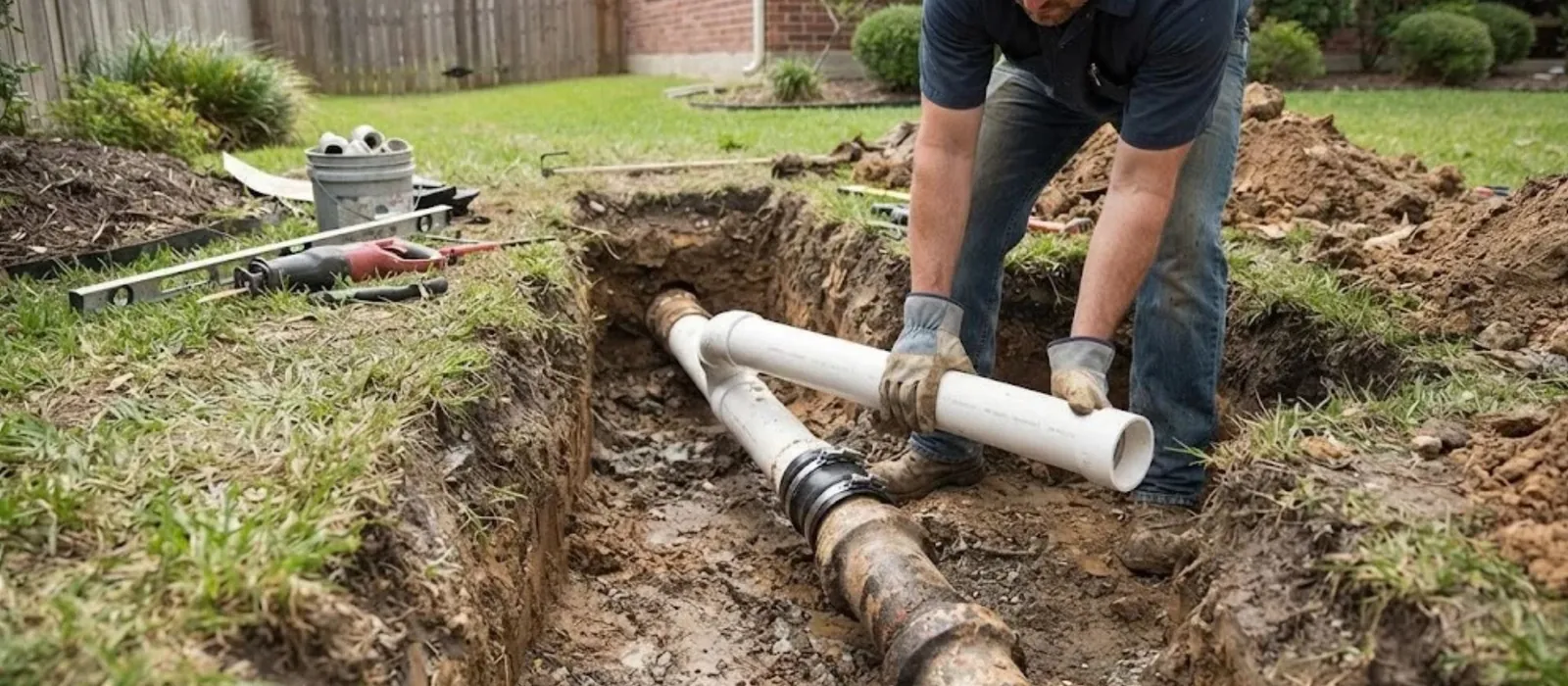
A sewer line fails slowly, then all at once. Roots work into a joint, a section of clay shifts, cast iron rusts through, and one day the main stops draining. If sewage is coming up in your basement, stop water use and call (440) 468-0237.
The 24/7 line takes sewer calls at any hour. We first restore flow if we can, then use a camera to find out whether the pipe needs cleaning, a spot repair or replacement.
Emergency signs the problem is the sewer line, not a drain
Multiple fixtures back up
Tub, toilet and floor drain acting up together means the shared main is blocked.
Cleaning does not last
Cabled twice and still clogging points to a damaged pipe or roots re-entering.
Soggy patch in the yard
A wet, sunken or unusually green strip over the lateral can mean a leaking sewer.
Sewer smell indoors
A dry trap or a cracked pipe lets gas into the house.
Any one of these is a reason to run a camera. Do not wait for a full backup, because sewage damage costs far more than a diagnosis. Our sewer inspection page covers the camera visit.
Cracked pipe with root intrusion: the spot repair question
The most common sewer diagnosis we hear described is one cracked section with roots growing through it. The rest of the pipe is fine and the homeowner wants to fix only the bad part.
A spot repair is often possible when the camera shows a short damaged section and the pipe on either side is sound. Options include a lined patch from inside the pipe or a small excavation to cut out and replace the section. The right choice depends on depth, location and what sits above the pipe.
Trenchless or dig: how the options compare
Trenchless lining or patching
- Little yard damage, no trench along the whole run
- Works when the pipe still holds its shape
- Seals joints against roots
- Not suited to collapsed or badly offset pipe
Open excavation
- Replaces the pipe completely
- Fixes collapsed, bellied or offset sections
- Can reroute around obstacles
- Disturbs lawn, drive or walkway
The camera decides. We will show you the footage and explain why one method fits your line, not the other. If there is a belly, where water pools in a low spot, lining alone will not fix it.
Cast iron, clay and plastic: what is under your house
Homes built in the 1950s and 1960s often have cast iron inside the foundation and clay or cast iron from the house to the street. North Olmsted's median house dates to 1966, so these materials are common in the city.
Cast iron rusts from the inside and flakes. Clay is brittle and joints open as the ground moves. Each has different repair rules. Pipe breaks inside the house are a separate job from the underground lateral, and our burst pipe repair page covers them.
Basement flooding and sewer repair are not always the same problem
Heavy rain can overload the public sewer. North Olmsted's wastewater office describes wet-weather overflows and has built storage and a relief sewer on Walter Road and in the Deerfield area to address them. Sewage that enters through your floor drain during a storm may be a public system issue, not a broken lateral.
The city also requires owners to keep roof drains and foundation drains off the sanitary sewer, and an illegal connection can send storm water into your line. We check both the pipe and the connections. Your sump pump discharge should go outside, not into the sewer.
If your home is on a septic system
Most homes in North Olmsted connect to the city sewer. If your property is on a septic system, tell us when you call. Septic work follows different rules and needs a different technician.
What affects the price of sewer repair
What drives the cost of a sewer repair
Your price is set once the problem is diagnosed, and it stays the price. Sewer repair is not a fixed-price item, and anyone quoting one before a camera look is guessing. Standard homeowners policies often exclude sewer line repair, though some endorsements cover backup damage. Call (440) 468-0237 to hear yours.
Camera shows a broken pipe?
Call the 24/7 line and we will walk through repair options before anyone breaks ground.
Questions about sewer line repair
Yes. The line at (440) 468-0237 is open every hour. We restore flow first if we can, then inspect the line on camera to decide on repair.
If a camera shows a clear, intact pipe, cleaning is enough. Cracks, offsets, bellies or collapsed sections need repair. The video makes the call obvious.
Plumbing work in the city needs a permit before it begins, and contractors must be registered with the city. Ask the Building Division whether your job needs a drawing or inspection. The plumber pulling the permit handles the filing.
Cleaning removes roots from the pipe, but they return through any opening. Sealing the opening with a liner or replacing the section is what stops them.
Not always. It saves restoration work, but if the pipe is collapsed or has a belly it will not work. The camera shows which method fits.
The owner is responsible for the building sewer from the house to the public connection under city code. The city handles the public main in the street.
Still unsure what you need? Call (440) 468-0237 and describe what you are seeing.