
Leak detection is the process of finding where water is escaping before anyone cuts into a wall or digs up a yard. If water is actively flowing, close the main shutoff and call (440) 468-0237. The line is open 24/7.
Most callers do not start with a diagnosis. They start with a symptom such as a spinning meter, a high bill, a stain on a ceiling or a warm spot on the floor. We work from that symptom, and the sections below follow the same path.
When a hidden leak is an emergency
Hidden leaks range from slow drips to active breaks. These signs mean act immediately.
- Water sound with every tap closed, or a meter that spins when everything is off.
- A ceiling stain that grows or drips, especially under a bathroom.
- A warm or wet patch on a floor, a spongy subfloor or a musty smell.
- Sudden drop in water pressure or discolored water.
- Water appearing at the edge of a slab, garage floor or a basement wall.
Close the main water valve if water is moving. Turn off power to wet areas only if you can reach the panel dry. Then call the 24/7 line so we can plan the detection visit.
Meter still running or the water bill jumped
The meter is the simplest leak detector in the house. Turn off every fixture and appliance, then watch the meter. If the small dial or flow indicator moves, water is leaving the system somewhere.
Next step is to close the main valve inside the house. If the meter stops, the leak is inside. If it keeps moving, the leak is between the meter and the house, a buried service line. That split saves hours of searching. Ask your water utility for usage history to see when the jump began.
Ceiling, wall and attic leaks
A ceiling stain tells you where water landed, not where it started. Water travels along joists and pipes before it shows. The origin might be a drain trap above, a supply joint, a tub overflow or a roof leak that only looks like a plumbing one.
We use moisture meters and thermal imaging to map the damp area, then open the smallest hole possible. Detecting first means one patch instead of a wall of drywall removed.
Slab leaks and floors that feel warm
Some North Olmsted homes have slab sections under additions, garages or entry rooms, even when the main house sits over a basement. A leak in a supply line under a slab can warm the floor above, raise the bill and, over time, damage flooring.
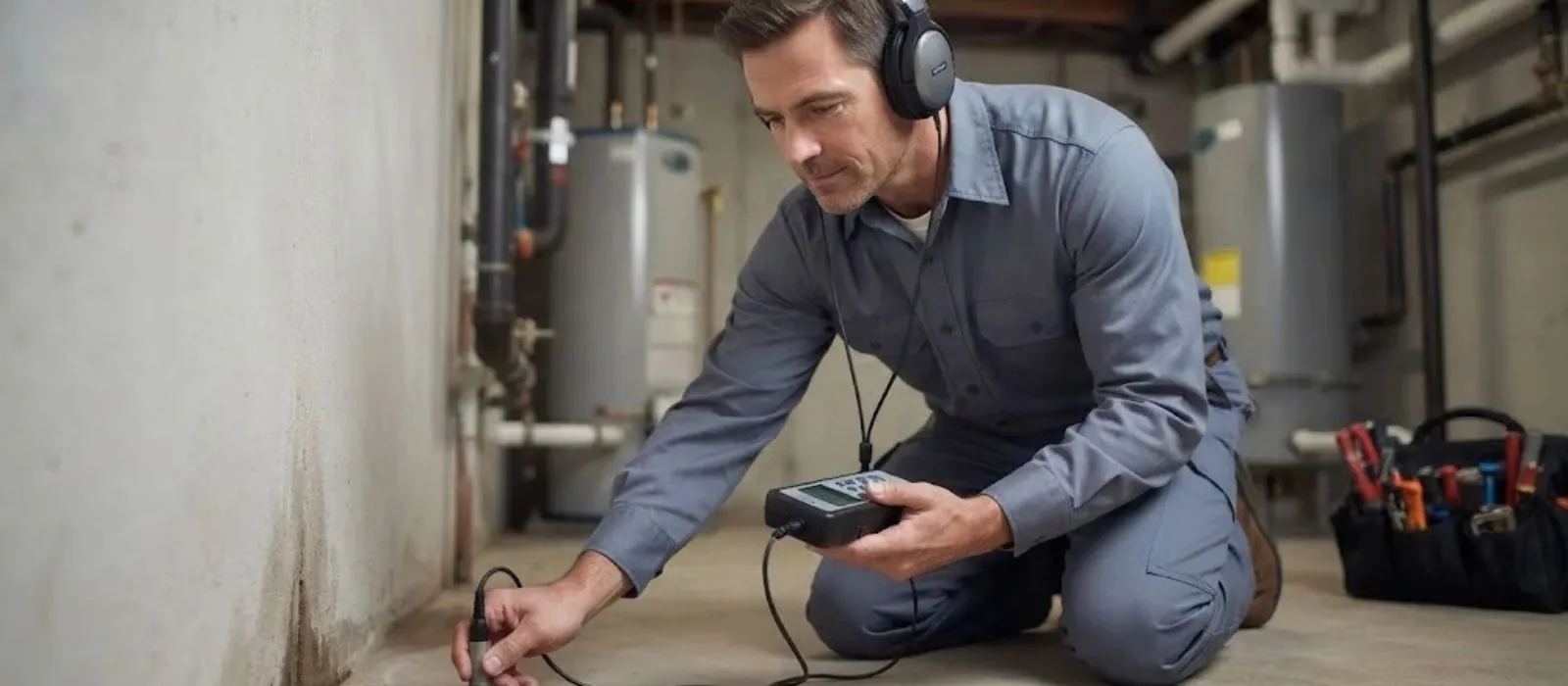
Acoustic listening equipment picks up the sound of escaping water through concrete, and a correlator narrows the location. Repair options include rerouting the line through walls or attic, or breaking the slab at the pinpointed spot.
Under-house and crawlspace leaks
A leak in a crawl space can run for months with no sign upstairs. Musty smell, sagging insulation or damp soil are clues. Some homes have a basement and a crawl space under an addition.
We check supply and drain lines in accessible areas, test pressure and use cameras for tight spaces. Fixing the leak is only half the job. Drying the space prevents mold and rot, and if the wet area is large, call a restoration specialist.
Buried and yard leaks
Service line
A leak between the meter and the house often shows as a wet patch, a sinkhole or a spinning meter with the main closed.
Irrigation
A sprinkler line leak can add to your bill and soften lawn. We test pressure by zone.
Meter box
Leaks at the meter connection are often visible as water in the box.
Pool and spa
Pool and spa plumbing leaks are different from the shell. We test lines separately.
For a confirmed buried line break, see water line repair for repair and replacement options.
How detection works, step by step
Listen
Ask about the symptom and when it started. Check the meter with everything off.
Isolate
Close valves to split the system and find which section loses pressure.
Pinpoint
Use acoustic, thermal and moisture tools to narrow the spot.
Confirm
Open the smallest access and confirm before repairing.
This sequence turns a vague symptom into a specific location and a clear price. When the result points to a broken pipe, the repair follows under burst pipe repair.
Water heater leaks and fixtures that look like hidden leaks
Plenty of mystery moisture comes from the water heater, an appliance hose or a toilet supply. We check those first because they are fast to rule out.
If the leak is the heater tank, water heater repair covers next steps.
Winter and the Cuyahoga County climate
The National Weather Service normals for Cleveland show a January average low near 22 degrees. Pipes in exterior walls, garages and crawl spaces can freeze and crack, and the leak appears when they thaw.
If you see wet drywall a day after a cold snap, assume a split pipe near an exterior wall. We can find the split with moisture mapping before opening the wall.
What to do before we arrive for a suspected leak
- Check the water meter with every fixture off. A moving dial or spinning triangle suggests a leak.
- Shut off the main valve if you see active water or a ceiling stain growing.
- Move belongings away from wet walls and floors and open windows for airflow.
- Do not cut into drywall or tile before we locate the leak, because it can make the damage bigger.
- Photograph stains and meter readings for your insurer.
What affects the price of leak detection
What drives the cost of a leak detection visit
A clear figure is given once the technician has seen the problem. Detection and repair are priced separately, because you may only need the finding. Standard homeowners policies often cover resulting water damage but not the cost of finding the leak in all cases, so check your policy. Get your own figure by calling (440) 468-0237.
Meter running with everything off?
Close the main, then call the 24/7 line. We start with the meter test.
Questions about leak detection
Yes. The line at (440) 468-0237 is open 24/7, and active leaks get priority. We will tell you how to stop the water on the phone.
Common signs are a warm floor spot, the sound of running water, a higher bill and damp flooring. A meter test and acoustic check confirm it.
We detect first, which narrows the opening to a small area. Sometimes a section must be opened for repair, but detection limits it.
If the meter moves with all water off, there is a leak. Closing the main inside the house shows whether it is inside or between the meter and the house.
Yes. We test by zone and check valves and backflow devices. Many yard leaks add to the water bill without any visible sign.
We can test the supply and return plumbing. Shell leaks are separate and may need a pool specialist.
It depends on the policy and the cause. Many policies cover sudden water damage but not gradual leaks. Keep records and ask your insurer.
Still unsure what you need? Call (440) 468-0237 and describe what you are seeing.