
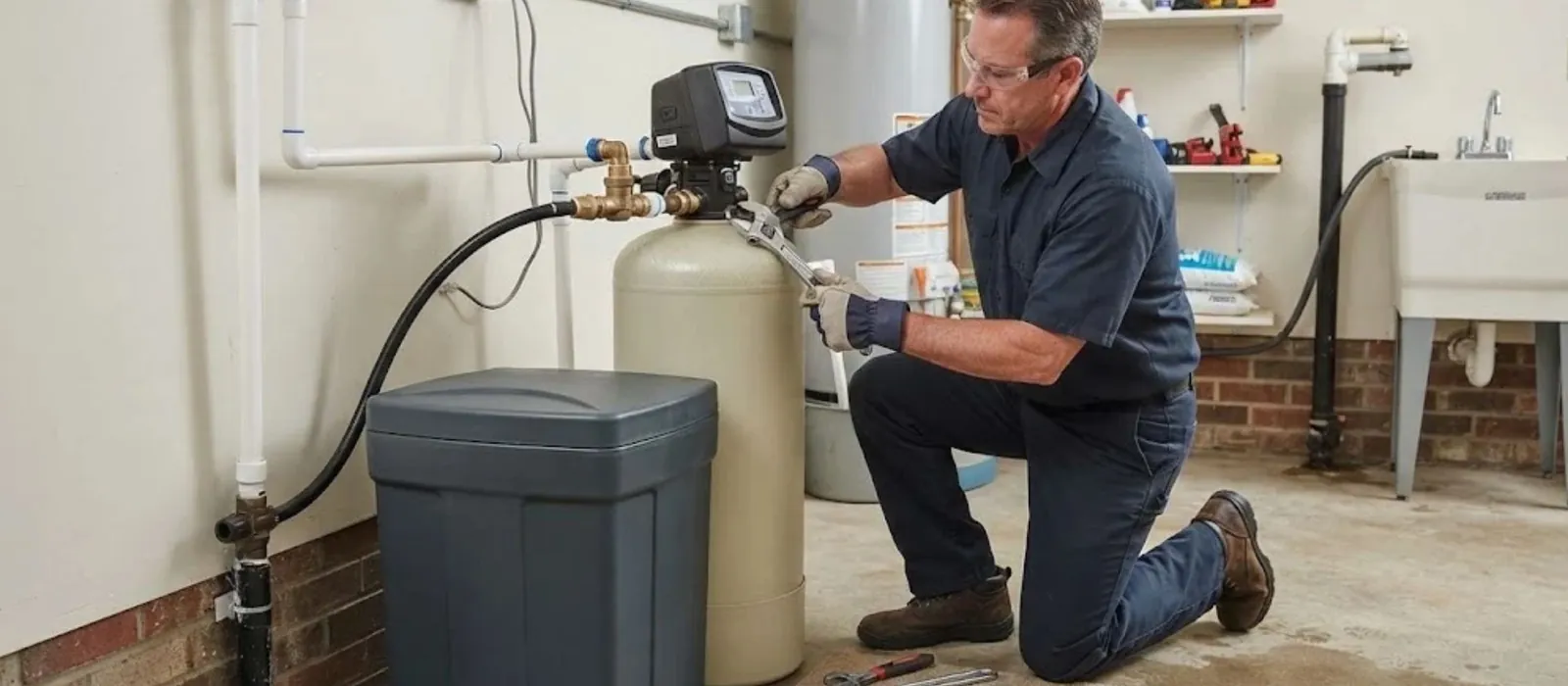
Hard water leaves scale on fixtures, spots on glass and buildup in water heaters. A softener removes the minerals that cause it. A filter addresses different things, such as taste, odor or sediment.
Call (440) 468-0237 to plan an install or repair. We explain what each system does and does not do.
Start with a test, not a sales pitch
Cleveland Water's 2025 report lists hardness of 105 to 130 ppm, averaging 117, which is moderately hard. That is a regional number, so test your tap and ask your utility which report applies to your street.
A simple test kit shows hardness. A lab test shows other contaminants. A system sized to your actual water works better and costs less than one chosen from a brochure.
Softener, filter or reverse osmosis
| System | Does | Does not |
|---|---|---|
| Water softener | Removes hardness minerals, protects heaters and fixtures | Does not remove most contaminants |
| Whole house filter | Removes sediment, chlorine taste, odor depending on media | Does not soften |
| Reverse osmosis | Treats drinking water at one tap | Not for whole house flow |
| Sink filter | Improves taste at one faucet | Limited capacity |
We make no health claims. If you have concerns about a specific contaminant, talk to your doctor and use a certified lab test.
Softener installation and repair
A softener installs on the main water line with a bypass, a drain line and an overflow. It needs a power outlet and room for salt. The drain must meet code and avoid a cross connection.
Repairs include control valves, resin tanks, brine valves and injectors. If the system is not working, we check the settings, the salt and the resin before replacing parts.
What a softener does to your plumbing
Softened water reduces scale on heating elements and in the water heater. Many tankless units benefit. See tankless water heater for flush schedules.
A softener adds sodium to the water in small amounts. If you are on a restricted diet, ask your doctor and keep an unsoftened cold tap in the kitchen.
On-demand and compact options
Some homes choose compact softeners or point-of-use systems. Space, flow and budget decide. A small house with one bath needs a smaller unit than a family of five.
We size by flow rate and hardness, not by family size alone.
Maintenance and when to replace
Salt, resin cleaning and valve service keep a softener working. Resin beads wear out over many years. Many softeners last 10 to 15 years.
An annual look catches problems early. If the system is old and failing, replacement may cost less than repairs.
Signs of hard water at home
White crust on fixtures
Scale builds on faucet aerators, showerheads and kettles.
Spots on dishes and glass
Minerals stay behind as water dries.
Soap that will not lather
Hard water reacts with soap and leaves film.
Short water heater life
Scale on the tank bottom and elements shortens service life.
These signs show hardness, not safety. If you worry about contaminants, a lab test is the right step, not a guess from spots.
Sizing a softener the right way
A softener is sized by capacity in grains between regenerations. The calculation uses hardness, household water use and how many days you want between cycles.
Oversizing wastes salt and water. Undersizing means hard water breaks through. We calculate from your test result and your number of bathrooms, and we set the regeneration schedule to match.
Drain, overflow and code details
A softener discharges brine and rinse water. That water must go to a floor drain, a standpipe or a laundry tub with an air gap so it cannot siphon back into the system.
North Olmsted prohibits clear water connections to the sanitary sewer in specific cases, such as sump pumps, so ask the Building Division if you are unsure where a discharge may go. We place the drain according to code and test for leaks before we leave.
What affects the price of softener work
What drives the cost of a softener or filter job
What you will pay is stated before we start, and the reasons are explained. Cost depends on the system and the plumbing. Insurance does not cover these. Give us a call at (440) 468-0237 for specifics.
Scale on everything?
Call and tell us what you see. We will suggest a test and a plan.
Questions about water softener and filtration
Moderately hard in much of the Cleveland Water system. Test your tap to see your own number.
No. Low pressure comes from pipe, valve or supply problems. See repiping.
A softener addresses hardness. A filter addresses taste, odor or sediment. Many homes benefit from both.
It depends on the model and hardness. Check the display and refill when low.
Yes, for most common brands.
Questions? Call (440) 468-0237.