
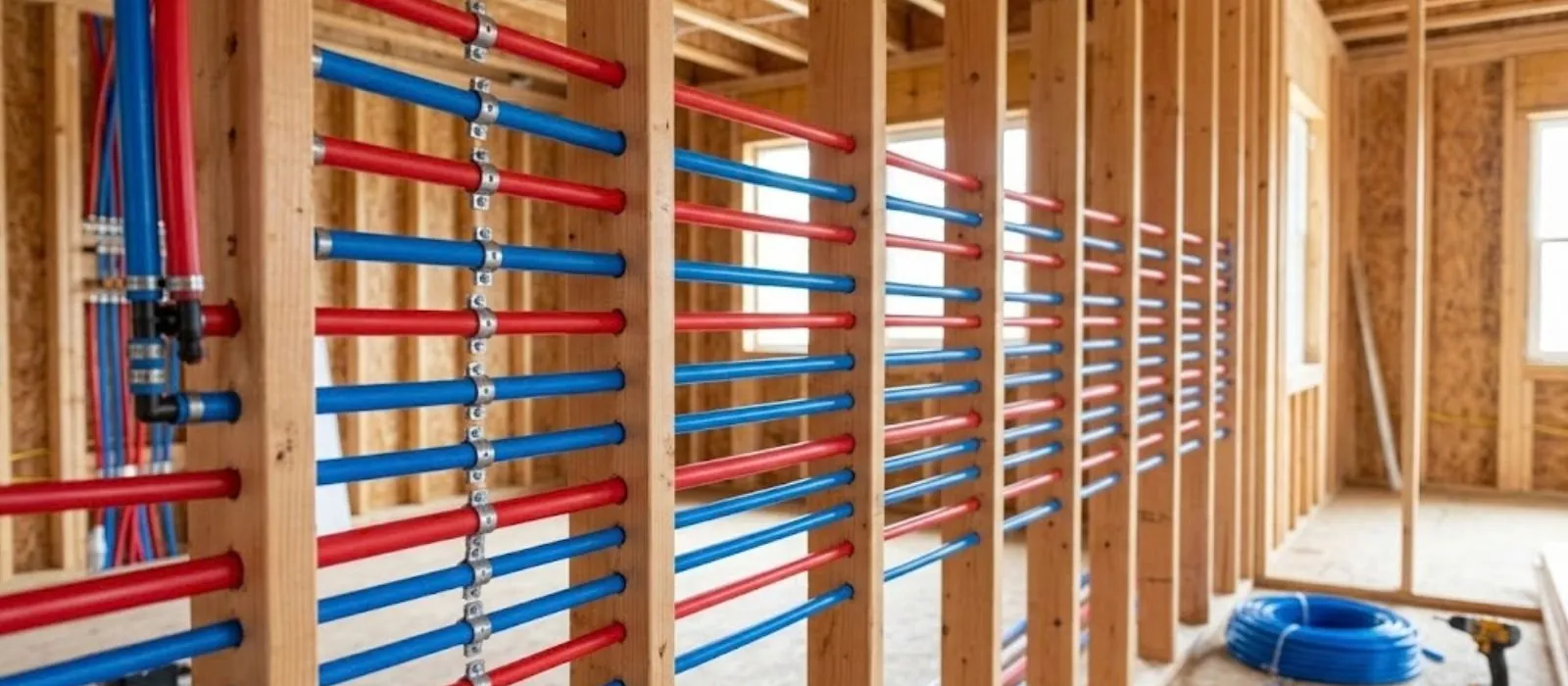
Repiping means replacing the supply pipes in a house, not just fixing one leak. It makes sense when the pipes are failing throughout, such as galvanized steel narrowed by rust or copper with repeated pinholes.
It is a planned project. Call (440) 468-0237 to ask whether your house needs it, and we will explain how to check.
Signs you may need repiping
Brown or rusty water
Especially on first use in the morning, which can signal galvanized corrosion.
Low pressure at many fixtures
Mineral buildup narrows old pipe and chokes flow.
Repeated pinhole leaks
More than one in a few years suggests widespread corrosion.
Visible corrosion
Green or white crust on copper, rust on galvanized joints.
A single leak is not a reason to repipe. If it is only one leak, we repair it and check the rest. See burst pipe repair for that path.
Galvanized pipe in older houses
Galvanized steel was common in homes built before the 1960s and remained in use into the 1970s. It corrodes from the inside, narrows over decades and eventually restricts flow or leaks.
The Census survey profile shows about one in ten North Olmsted homes were built before 1950, and many more date from the 1950s and 1960s, so mixed piping is likely. A house may have galvanized nipples near the heater or original copper in other places.
Copper, PEX or something else
| Material | Strengths | Cautions |
|---|---|---|
| PEX | Flexible, quick to install, resists freezing splits | Needs protection from sunlight and some chemicals |
| Copper | Long history, durable, handles heat | Costs more, can corrode in aggressive water |
| CPVC | Lower cost | Can become brittle over time |
We recommend what suits your house. PEX is the usual choice for whole-house repipes because it fits through walls with less demolition.
How a repipe is done
Plan
Walk the house, map fixtures, agree on pipe routes and access points.
Permit
Pull the permit and schedule inspection.
Replace
Run new lines, connect fixtures and test pressure.
Restore
Close access holes and leave them ready for patching.
Most repipes are done with the family living in the house, with water off for part of the day. We tell you in advance when and for how long.
Permit and inspection
The City of North Olmsted Building Division issues plumbing permits, and the permit holder arranges inspections. Contractors must be registered with the city.
A repipe is a major job, so ask the Building Division what applies. We handle the permit and the inspection.
Before you repipe: alternatives
Spot repairs, replacing only galvanized sections or adding a pressure reducing valve can solve some problems. Tell us what you want to fix and we will say honestly whether a full repipe is needed.
If low pressure comes from the street, see water line repair. A leak detection visit can also confirm where the problem lives before you decide.
Living in the house during a repipe
Most repipes are done with the family home. Water is off for part of each day, and we tell you when. Walls get small access holes, and floors are covered to protect them.
Plan on a few days of dust and noise. Move items from the work areas, and tell us about pets and sleep schedules so we can plan around them.
Repiping is not the cure for every pressure problem
Low pressure has several causes. A failing pressure reducing valve, a partly closed main valve, a narrow service line or a municipal issue can all mimic bad house piping.
We test before recommending a repipe. A one-hour diagnosis can save a large expense. If the answer is a full repipe, you will see the test results that led us there.
Codes and permits for repiping
The Ohio Plumbing Code, built on the International Plumbing Code (IPC), lists the pipe materials approved for drinking water, including copper and PEX. It also sets rules for support, fittings and testing.
In North Olmsted, plumbing work needs a permit before it begins, and contractors must be registered with the city. Ask for the permit number and the inspection date before work starts.
What affects the price of repiping
What drives the cost of a repipe
You will hear the cost of each option before anything is ordered or installed. Costs scale with the size of the house and the access. Insurance does not cover repiping due to age or corrosion, but may cover water damage from a sudden break. Speak with us at (440) 468-0237 about your price.
Wondering if your pipes are done?
Call and describe the water color, pressure and leak history.
Questions about repiping
A magnet sticks to galvanized steel and not to copper. Galvanized is gray, and joints show rust. A plumber can confirm in minutes.
Many houses take a few days depending on size and access. The technician gives a schedule before starting.
For part of each day during the work. We plan the shutoffs so you can use the house in the evening where possible.
PEX approved for potable water is widely used. We use certified materials.
Yes. Partial repipes are common, for example one bathroom or the galvanized section.
Not sure? Call (440) 468-0237.