
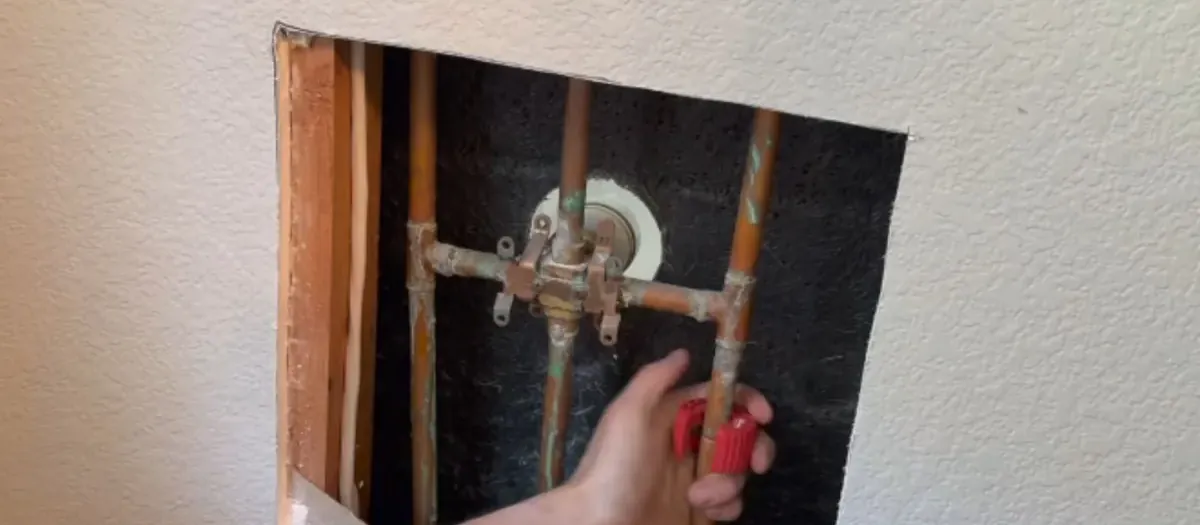
Where is the water coming from?
Start by locating the drip. Water from the shower head or tub spout after you turn the handle off points to the valve inside the wall. Water around the handle points to a worn seal or loose trim. Water staining a ceiling or wall nearby points to a leak behind the tile.
Each of those has a different fix, so spend a minute watching before you buy parts. Put a dry paper towel under the spout and check it after an hour.
Know your valve before you shop
| Valve type | How it looks | Usual wear part |
|---|---|---|
| Single-handle cartridge | One lever or knob that sweeps hot to cold | Cartridge or O-rings |
| Compression, two handles | Separate hot and cold handles that turn several times | Rubber washers and seats |
| Ball type | Single handle, common in kitchen faucets | Springs and seats |
| Pressure-balance | Single handle that guards against temperature swings | Cartridge or balancing spool |
Take the handle off and look inside. The brand name is usually stamped on the cartridge or the valve body, and that tells you which replacement fits.
Replacing a cartridge
Shut off the water
Close the shutoff valves for the bathroom, or the main valve if the shower has none.
Remove the handle
Pry off the cap, remove the screw and pull the handle and trim plate.
Pull the cartridge
Remove the retaining clip or nut and pull the cartridge straight out with pliers.
Install the match
Set the new cartridge in the same orientation, replace the clip and test before you reinstall the trim.
Take the old cartridge to the store. Cartridges that look alike can differ by a few millimeters, and the wrong one never seals.
Replacing washers on a two-handle faucet
Compression faucets seal with a rubber washer pressed against a brass seat. When the washer hardens or the seat pits, the faucet drips. Replace the washer, and if the seat is rough, resurface it with a seat dresser.
This is a cheap repair that takes patience. Mark each handle before you remove it so hot and cold return to the right sides.
The North Olmsted angle
The median North Olmsted home dates to 1966 in Census survey data, so many bathrooms still have original two-handle valves or early single-handle valves. Replacement cartridges for discontinued models can be hard to find, and the better move is sometimes to swap the whole valve behind the wall. Cleveland Water reports hardness of 105 to 130 ppm, and mineral scale can lock a cartridge in place. Soak a stuck cartridge in vinegar before you pull it, and never force it.
When the leak is behind the wall
- A wet spot or stain on the ceiling below the bathroom.
- Bubbling paint or soft drywall near the tub.
- A musty smell that does not clear with ventilation.
- A water bill that rose with no change in use.
Do not tear into the tile first. A plumber can locate the leak without demolition using leak detection tools. If water is actively spraying, shut off the main and call burst pipe repair.
Replace the valve or just the part?
Replace the part
- Fast and low cost
- Works if the valve body is sound
- Parts must match your model
Replace the valve
- Fixes corroded or cracked bodies
- Often needs access from behind the wall
- Lets you upgrade to a modern pressure-balance valve
A valve replacement takes more work and sometimes a tile repair. If your shower has had repeated repairs, a new valve usually costs less over time. See our faucet repair page for what we handle.
Prevent the next leak
Do not overtighten handles, because that crushes seals. Clean the shower head and spout of scale at least a couple of times a year. If you have a water softener option in mind, scale on valves is one reason to consider it.
We work in Westlake and Fairview Park as well as North Olmsted, so a shower valve swap can be handled the same day when schedules allow.
Tools and supplies
- A set of hex keys and a Phillips screwdriver for the handle.
- Cartridge puller or slip-joint pliers.
- Silicone grease for O-rings and seals.
- Replacement cartridge or washers, matched to your valve.
- A towel or plug for the tub drain so small parts do not fall in.
Lay parts out in the order you remove them. A phone photo of each step makes reassembly easier, especially with two-handle valves where the stems differ.
Why a repair sometimes fails
A new cartridge cannot seal against a pitted valve body, so a leak that returns within weeks points to the body, not the part. Mineral deposits can also scar the seating surface, and force while removing the old cartridge can nick it.
Another cause is water pressure that is too high. Pressure above the normal range stresses seals and shortens their life, and a pressure gauge on a hose bib will tell you if that is the case.
If a second repair fails, stop. Replacing the valve is a more reliable fix than a third cartridge, and it is easier to do while the wall is already open.
Protecting the bathroom while you work
Cover the tub floor with a towel so a dropped tool does not chip the finish. Plug the drain with a rag. Keep the trim screws in a cup so none are lost, and tape over the shower head if you need to keep spray off the valve.
If you open the wall for access, plan the repair carefully. An access panel on the back side of the wall, often in a closet or hallway, can save you from cutting tile. A plumber can tell you if one exists for your house.
After the repair, run the shower for several minutes and watch for dripping inside the wall or on the ceiling below. A small amount of moisture can appear after you restore the water, but it should stop in minutes.
Code and permit note
Replacing a worn cartridge is maintenance. Replacing the valve behind the wall is plumbing work under the Ohio Plumbing Code, which builds on the International Plumbing Code (IPC), and the city may want a permit. Anti-scald valves are required in many new showers, so ask which type you have.
Questions homeowners ask
The cartridge or washer is worn. It no longer seals hot and cold inlets.
Many homeowners can, if they can shut off the water and match the part. A seized cartridge or a corroded valve is worth a plumber.
Remove the handle and cartridge, then match the brand and shape. Bring the old one to the store.
Usually yes. A shower head that drips after shutoff means water is passing the valve.
Sometimes. Houses from the 1960s can have discontinued valves, and a valve swap may be the better fix.
Have a question that is not here? Call (440) 468-0237.