
The main sewer line carries everything from your house to the public sewer at the street. When it clogs, the lowest drain in the house is the first to show it, usually a basement floor drain or a tub.
If you see rising water now, stop using fixtures and call (440) 468-0237. We take main line calls 24/7 and can usually tell on the phone whether it is a cleanout job or something worse.
When a main sewer backup is an emergency: what to do first
Locate your cleanout if you know where it is. It is a capped pipe, often in the basement near the foundation wall or outside near the house. Do not open it while water is rising, because pressure can push sewage out.
Shut off the washer and stop flushing. If the backup is already on the floor, keep power cords up and out of the water. Our drain cleaning page lists signs that separate a branch clog from a main line one.
Where main line clogs come from
Roots
Tiny roots enter at joints and grow into a mat that catches paper.
Grease and wipes
Fat, so-called flushable wipes and paper towels bind together downstream.
Scale and sag
Old cast iron narrows from rust, and a sagging section holds water and solids.
Foreign objects
Toys, rags and construction debris occasionally find their way into laterals.
How the cleaning is done
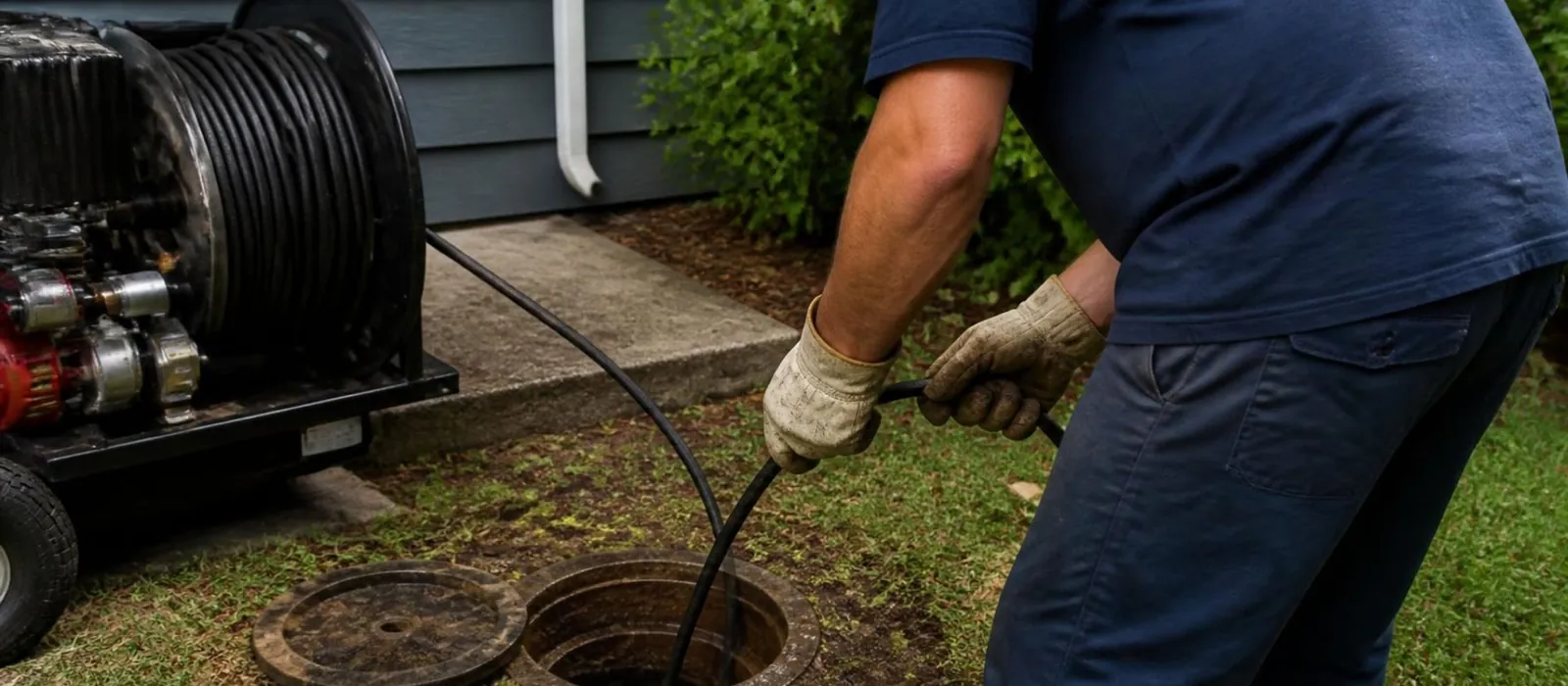
We start at the cleanout with a large cable, which cuts through most blockages and restores flow. If the cable returns with roots or grease, we follow with jetting to wash the pipe wall. A camera pass confirms the pipe is clear and shows any damage.
That sequence solves the immediate emergency and answers the follow-up question, which is whether the clog will return. If the pipe is damaged, cleaning only buys time and the next step is sewer line repair.
Sewer drain cleaning on a schedule
A line with a history of root growth benefits from planned cleaning before it backs up. Many homeowners pick an interval after the first emergency, and the right spacing depends on what the camera shows.
A scheduled visit costs less than an after-hours call and avoids a flooded basement. We will tell you honestly if the pipe has deteriorated to the point where cleaning is a short-term patch.
The 1960s lateral and what it tells us
Houses built from the 1950s through the 1970s make up nearly three quarters of North Olmsted housing, based on Census survey data. Their sewer laterals are often clay or cast iron with many joints, and each joint is a place roots can enter.
That does not mean your line is failing. It does mean a camera look is a smart purchase if you have had two backups, because it tells you whether to keep cleaning or plan a repair. Related reading on hydro jetting explains why jetting often follows a cable.
Storm water, backwater valves and the city sewer
Cleaning your private line will not stop a backup that comes from an overloaded public sewer in a storm. North Olmsted has a backwater valve policy and permit through the Engineering Department, and the city says a valve needs a cleanout on each side. The dye test that proves no downspout or footing drain feeds the sanitary line must be done by a registered contractor.
If you have flooded more than once in heavy rain, ask about a backwater valve. We can install one and make sure a downspout or sump pump is not feeding the sanitary line, since that is prohibited by city code.
What affects the price of sewer line cleaning
What drives the cost of cleaning a main line
No work begins until the number is on the table and you have agreed to it. Cleaning is priced by the method, the access and the hour. Backup damage is often excluded from standard homeowners policies unless you added an endorsement. Phone (440) 468-0237 and describe the job for a number.
Main line stopped?
Call the 24/7 line. We will plan the cable, jetting and camera before arriving.
Questions about sewer line cleaning
Yes. The 24/7 line at (440) 468-0237 takes main line backups at any hour and prioritizes active sewage in the house.
Look for a capped pipe, usually 3 or 4 inches across, in the basement near the foundation or outside near the house. If you cannot find one, tell the dispatcher and the technician will find the best access.
There is no single answer. A line with no history of problems may never need scheduled cleaning. One with repeated root clogs benefits from planned cleaning at an interval the camera supports.
Yes. Sewage backing into a basement soaks drywall, flooring and stored items, and it is a health risk. Stopping water use and getting the line cleared quickly limits the damage.
If only your house backs up, the blockage is on your private line. If several neighbors have backups, the public sewer may be overloaded and the city collection crew should be notified.
The camera will show it. We will explain repair options before any work, and cleaning will only be recommended as a temporary measure if the pipe cannot hold.
Still unsure what you need? Call (440) 468-0237 and describe what you are seeing.