
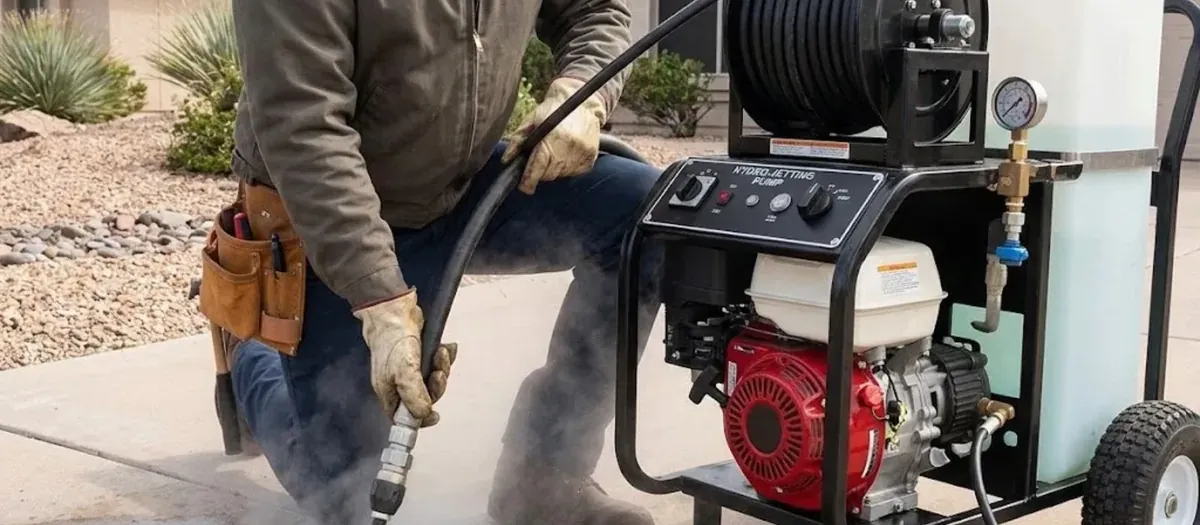
Hydro jetting sends water through a hose at very high pressure to scrub the inside of a drain pipe. It clears grease, scale, sludge and root hair that a cable leaves behind, which is why it is the usual answer when a clog keeps returning.
If sewage is backing into a basement now, stop using water and call (440) 468-0237. We take jetting calls 24/7, and a technician will tell you over the phone whether jetting or a simple cable is the right first move.
When a sewer backup is an emergency: what to do first
A backup at 2 a.m. feels like a crisis because it is one. Sewage in a floor drain or tub carries bacteria, so the first jobs are to stop adding water and protect people and belongings.
- Stop every tap, toilet, dishwasher and washer in the house.
- Move stored items and electronics off the basement floor.
- Keep children and pets out of the wet area and wear boots and gloves if you must enter.
- Do not pour chemicals into the drain or run a pressure washer into it.
- Call the 24/7 line and tell us how many drains are affected.
Photograph the water and any damaged belongings before you clean. If an insurance claim is possible, those pictures help, and you can read about coverage on our drain cleaning page.
Why the clog keeps coming back
A cable is a spinning blade on a flexible cord. It cuts through a clog, but it leaves a ring of grease and scale clinging to the wall, and that ring catches the next load of debris.
People often tell us the last company snaked the line and it clogged again within weeks. Often the cable only opened a channel the width of the cable while the pipe was still mostly narrowed. Jetting washes the full diameter, so flow returns to what the pipe was built for.
What jetting clears and what it does not
| Problem in the pipe | Jetting result | Notes |
|---|---|---|
| Kitchen grease coating | Strong | Hot water heads and rotating nozzles cut the fat layer |
| Mineral scale in old cast iron | Strong | Removes loose scale, does not repair rust-through |
| Small root hair | Strong | Fine roots are cut and flushed downstream |
| Thick root mass | Partial | May need a cutting head first, then a camera |
| Collapsed or offset pipe | None | Needs sewer repair, not cleaning |
| Hard blockage like a toy or rag mass | Mixed | Cable or retrieval tool may be faster |
The honest answer is that jetting is a cleaning tool, not a repair tool. If the line is physically broken, the camera will show it and we will tell you so before any digging is discussed. See sewer line repair for those cases.
Camera first, jet second, camera again
A good jetting job has three steps. A camera confirms the pipe is sound and finds where the blockage sits. The jetter then clears it. A second pass with the camera shows the pipe wall after cleaning and records what remains.
That order matters on older lines. Clay and cast iron from the 1950s and 1960s can have hairline cracks that high pressure will worsen if nobody checked first. Our sewer inspection page explains the video, and you can keep the footage.
Who owns which part of the line in North Olmsted
North Olmsted has its own wastewater treatment plant, and the city collection crew answers overflows on public sewers. The pipe from your house to the street connection is the owner's responsibility under the city code, which assigns the cost of the building sewer to the owner.
That split decides who you call. If only your house backs up, the jetting job is on your line. If neighbors on the street also have sewage in basements, call the city wastewater office first, then call us for a cleanout so your line is clear when flow returns.
Jetting for restaurants, rentals and shared lines
Grease lines at food businesses and older rental buildings with shared stacks are common jetting jobs. Property managers can call on behalf of tenants and should give the unit, the fixtures affected and any prior cleanings.
A building with a grease trap needs the trap cleaned as well as the line, which is part of commercial plumbing work.
Standards and limits we work within
Jetting is done with equipment matched to the pipe size and material, and a camera look tells us whether the pipe can take it. A cracked or collapsed pipe should be repaired, not jetted.
Jetting normally starts at a cleanout. The International Plumbing Code (IPC), which the Ohio Plumbing Code follows, calls for access cleanouts on building sewers, and a house without one may need one added first.
What affects the price of jetting
What drives the cost of a jetting visit
We give you a clear price before work starts. Jetting costs more than cabling because it uses larger equipment and more time, but it often replaces repeat visits. Many homeowners policies exclude drain backup unless an endorsement was added, so check yours. Want a real number? Call (440) 468-0237.
Line backed up again?
Call the 24/7 line. Tell us what the last cleaning was and how long ago, and we will plan the right tool.
Questions about hydro jetting
Yes. Sewer backups do not keep office hours, so the line at (440) 468-0237 is open 24/7. We may start with a cable to restore flow quickly and schedule full jetting right after if the pipe needs it.
It is safe for sound pipe at the right pressure. Old clay or cast iron with cracks can be damaged, which is why a camera check comes first on houses built before about 1980.
Many residential jobs take one to a few hours, including the camera. Long runs or heavy root growth take longer, and the technician will say so before starting.
It clears roots from the pipe interior, but roots return if there is an opening for them to enter. Regular cleaning or a spot repair is the long-term answer.
Yes. Smaller jetting heads handle two and three inch branch lines. Kitchen lines with grease buildup are among the best uses.
Rodding uses a rigid or flexible cable to drill through a clog. Jetting uses water at high pressure to scrub the wall. Jetting cleans more, rodding is faster for a simple blockage.
Still unsure what you need? Call (440) 468-0237 and describe what you are seeing.