
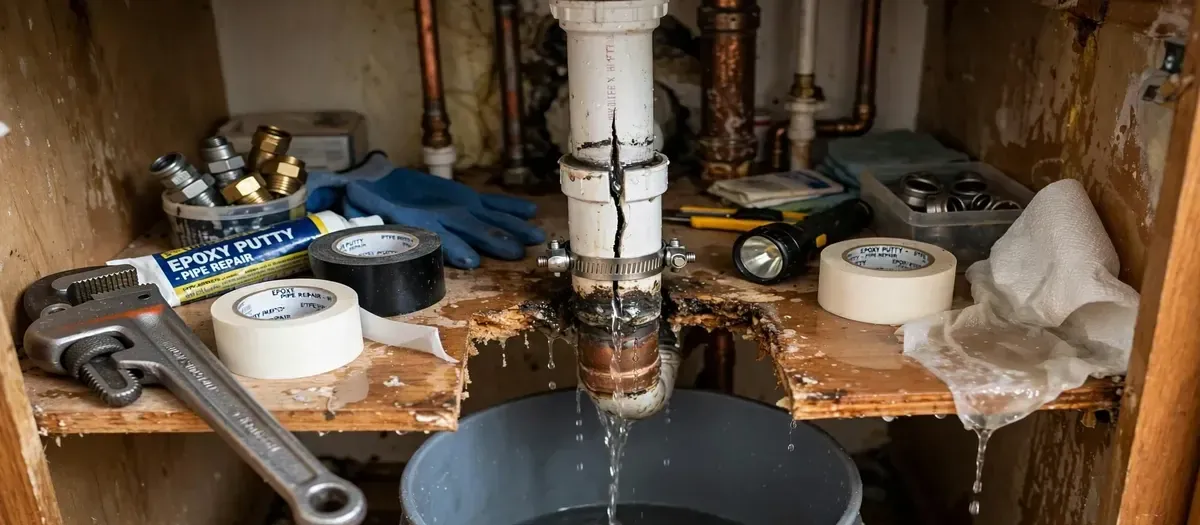
What plumbing tape does
Plumbing tape is thin PTFE film, often called Teflon tape. It fills tiny gaps in threads and lubricates the joint so it tightens evenly. It does not glue anything.
It works on tapered pipe threads such as those on shutoff valves, hose bibs and nipples. It is the wrong choice on many other joints, which is why this guide has a section on where not to use it.
Where it belongs and where it does not
| Joint | Use tape? | Why |
|---|---|---|
| Tapered pipe threads (NPT) | Yes | Fills the thread gaps |
| Threaded galvanized or brass nipple | Yes | Common use |
| Compression fittings | No | Seal is the ferrule, not the thread |
| Flare fittings | No | Metal-to-metal seal |
| Gas connections | Use gas-rated yellow tape or paste | Standard white tape is not for gas |
| Hose threads (garden hose) | No | Sealed by a washer |
Wrapping it right
Clean
Wire-brush the male threads and wipe them dry.
Direction
Wrap clockwise as you face the end of the pipe so the tape tightens as you screw on the fitting.
Turns
Use three to four overlapping turns, covering the threads but not the first one at the tip.
Tighten
Hand tighten, then a turn or two with a wrench. Over-tightening cracks fittings.
Wrapping backwards causes the tape to unwind as you tighten and creates leaks. If the tape bunches, remove it and start over.
Tape versus pipe dope
Pipe dope is a paste sealant. Some plumbers use both on stubborn joints, while others prefer one. Dope fills larger gaps and works on rough threads.
For a one-time repair at a shutoff or a hose bib, either works. Whichever you choose, check the product label for the fluid and temperature it can handle. Gas needs a gas-rated product.
The North Olmsted angle
Census survey data gives a median build year of 1966 for North Olmsted homes, so you may find galvanized nipples and old brass fittings with worn or corroded threads. Tape will not seal damaged threads. If a nipple is rusted or pitted, replace it. In North Olmsted, plumbing work needs a permit before it begins, according to the city permit page, but ask the Building Division whether a simple repair like re-taping a hose bib qualifies.
Fixing a drip at a threaded joint
Shut off the water and drain the line. Unscrew the joint, clean both sets of threads and re-wrap with fresh tape. Reassemble and turn the water on slowly to check for weeping.
If the drip returns, the threads may be damaged or the fitting cracked. A dripping joint inside a wall is a different matter. If you suspect hidden moisture, see leak detection before you open drywall.
Common mistakes
- Wrapping in the wrong direction.
- Covering the end thread, which lets tape shred into the line.
- Using too much tape, which can crack the female fitting.
- Taping compression or flare joints.
- Reusing old tape instead of wrapping fresh.
When to stop and call a plumber
If a joint is on a gas line, a main supply or a water heater connection that is hard to reach, call a professional. If a faucet still leaks after you have resealed the threads, the problem may be a cartridge, not the joint, covered by faucet repair.
We serve homes in North Olmsted, Westlake and Fairview Park around the clock if a small repair turns into a bigger leak.
Choosing the right tape
Plumbing tape comes in several colors and thicknesses. White tape is the standard thin tape for water and general use, and heavier pink tape is rated for water on larger pipe. Yellow tape is made for gas lines, and some tapes are made for oxygen or special service.
Pick the one that matches the fluid in the line. A tape with the wrong rating can break down or fail an inspection, so read the label before you start.
Fixing a hose bib or shutoff valve
Close the water
Shut off the supply and open the faucet to drain the line.
Back out the fitting
Hold the valve body with one wrench and turn the fitting with the other so you do not twist the pipe.
Clean and retape
Brush the threads clean, then wrap three to four turns in the proper direction.
Reinstall and test
Thread the fitting back by hand, finish with a wrench and open the water slowly.
Outdoor hose bibs deserve one more step. Disconnect hoses in the fall and drain the line, because water left in the pipe freezes and splits the fitting. Cleveland winters are long enough that this is a yearly habit worth building.
Other sealing options to know about
Tape is not the only tool. Pipe thread sealant, often called pipe dope, is a paste that fills larger gaps and suits rough or slightly worn threads. Some jobs use a flexible rubber washer instead of any sealant, such as garden hose connections and many faucet supply lines.
Compression fittings seal with a brass ring that squeezes against the pipe. If one leaks, tighten a quarter turn, and if that fails, replace the ring. Adding tape to a compression fitting makes it worse, because the tape prevents the metal from seating.
When two or more joints in the same area weep, the cause may be vibration or pressure rather than the sealant. Check pressure with a gauge and make sure pipes are supported, then redo the joints.
A short homeowner kit
Keep a roll of white tape, a roll of yellow gas-rated tape, a small can of pipe thread sealant, two adjustable wrenches and a wire brush in the same box. When a drip starts, you will not need a trip to the store.
Label the box and keep it near the main shutoff, where you will want it in a hurry.
Questions homeowners ask
Clockwise when looking at the end of the pipe, so the tape tightens as you thread the fitting on.
Three to four overlapping turns is typical for pipe threads.
Use a gas-rated tape or paste. Standard white tape is not made for gas. Gas work should be done by a licensed plumber.
Only at a threaded joint. It does not repair a crack or a pinhole in the pipe.
Yes. Older pipe threads can be pitted or corroded, and tape cannot seal them. Replace damaged fittings.
Have a question that is not here? Call (440) 468-0237.