
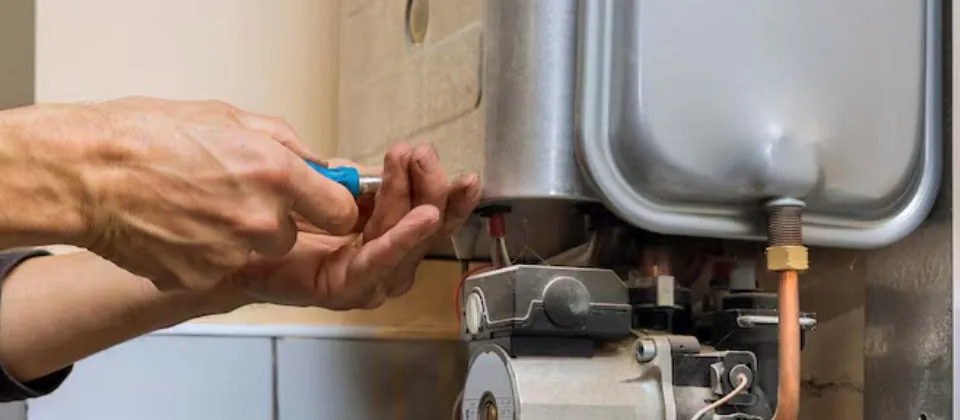
What the pump does
A hot water boiler heats water, and a circulator pump pushes it through pipes to radiators or baseboards. If the pump stops, the boiler can overheat while rooms stay cold.
Pumps are small, but they run for months every winter. Seals wear, bearings wear and the motor can burn out.
Signs of a failing circulator
No heat, boiler hot
The boiler is firing but the radiators stay cold.
Humming or grinding
A motor that hums but does not spin, or grinding from worn bearings.
Leak at the flange
Drips around the pump housing point to a failed seal or gasket.
Uneven heat
Some zones warm and others do not, which can also be an air or valve issue.
Quick checks before you call
- Confirm the thermostat is calling for heat and the boiler has power.
- Feel the pipes on either side of the pump. A hot inlet and cold outlet suggest the pump is not moving water.
- Check the boiler pressure gauge and bleed air from radiators.
- Listen for a hum at the pump with the thermostat calling.
- Look for rust, water stains or drips at the flanges.
Do not remove the pump with the system hot or pressurized. Shut off the boiler and let it cool first.
The North Olmsted angle
The National Weather Service climate normals for Cleveland put the average January low at about 22 degrees, and the area gets roughly 64 inches of snow in a year. A boiler pump that fails in January leaves a house without heat during the coldest weeks, and pipes in outer walls or unheated spaces can freeze. If the pump is more than ten to fifteen years old, ask a plumber to check it before the heating season starts.
Repair or replace
Repair
- Replace a seal or a cartridge if the pump allows it
- Lower cost when parts exist
- Not available for many sealed pumps
Replace
- New circulator fits the same flanges
- Variable-speed models save electricity
- Best choice for an old, noisy or leaking pump
Most homeowners end up replacing the whole circulator. It is a standard job, but it needs isolation valves, air purging and a pressure check afterward. Our boiler repair page covers the details.
What a pump replacement involves
The plumber closes the isolation valves, drains the pump section and unbolts the old pump. The new pump goes on with fresh gaskets, then the system is refilled, purged of air and tested.
If the system has no isolation valves, adding them first makes future service faster. If the boiler itself has problems, the pump may not be the only issue.
Boiler age and a bigger picture
A circulator is not the only part that wears out. If your boiler is old, ask about the heat exchanger, the expansion tank and the relief valve. A tired boiler may need replacement rather than a new pump.
We serve North Olmsted and nearby towns, including Fairview Park and Westlake, where many homes have hot water heat. For a failed heater at night, our water heater repair crew also works from the same 24/7 line.
Zones, valves and air in the system
Not every heating problem is the pump. Zone valves can stick closed, trapped air can block a radiator and a closed isolation valve can starve a loop. A zone that stays cold while others heat points to the valve or air, not the circulator.
Bleeding air from radiators is a simple task with a small key. Do it with the system cool, and have a towel ready. If air keeps returning, there is a leak or an expansion tank problem somewhere.
Preparing for the heating season
- Test the thermostat and replace batteries.
- Check boiler pressure and top up if it is low.
- Look for drips or rust at valves and pump flanges.
- Bleed radiators and check that each warms evenly.
- Schedule a service visit if it has been more than a year.
An early check costs little and gives you time to order parts. A pump that fails on a cold night is also a night when every plumber is busy.
What a service call should cover
A technician should check the pump, the isolation valves, the expansion tank, the pressure and the air vent. They should also look at the boiler controls, the flue and the condition of the heat exchanger when it is visible.
Ask for a plain explanation of what they find. A worn pump with a leaking flange is a clear case for replacement, while a noisy pump in a system full of air may only need purging.
Keep a note of the date of service and the pump model. Next year, you will know when to expect trouble, and you will have the model number handy if a part is needed in a hurry.
Staying warm if the pump fails in winter
If the pump fails on a cold night, keep interior doors open so warmth spreads, and use a safe supplemental heater according to its instructions. Let faucets on outside walls drip slightly if temperatures fall well below freezing.
Never run a gas oven or an outdoor-rated heater indoors for warmth. Carbon monoxide is a real danger, so make sure detectors work before the season begins. Call the 24/7 line if the house is dropping toward freezing, and we will tell you what to do while a plumber is on the way.
Questions to ask the technician
Ask what failed, why it failed and whether anything else in the system is wearing out. Ask whether the new pump is sized for your heating loop and whether it has isolation valves on both sides.
Also ask how the system was purged of air and what pressure it now holds. Those two answers tell you whether the repair was finished or only started.
Questions homeowners ask
Often ten to twenty years, depending on the model, water quality and run time.
The pump may have failed, there may be air in the lines or a zone valve may be stuck.
It is possible if there are isolation valves and you are comfortable with electrical connections. Many homeowners hire a plumber.
Noise is a warning, not usually a hazard. A failing pump can leave the house without heat, so get it checked.
Before the heating season. Cleveland winters are long, and a fall check is cheap compared with a January failure.
Have a question that is not here? Call (440) 468-0237.