
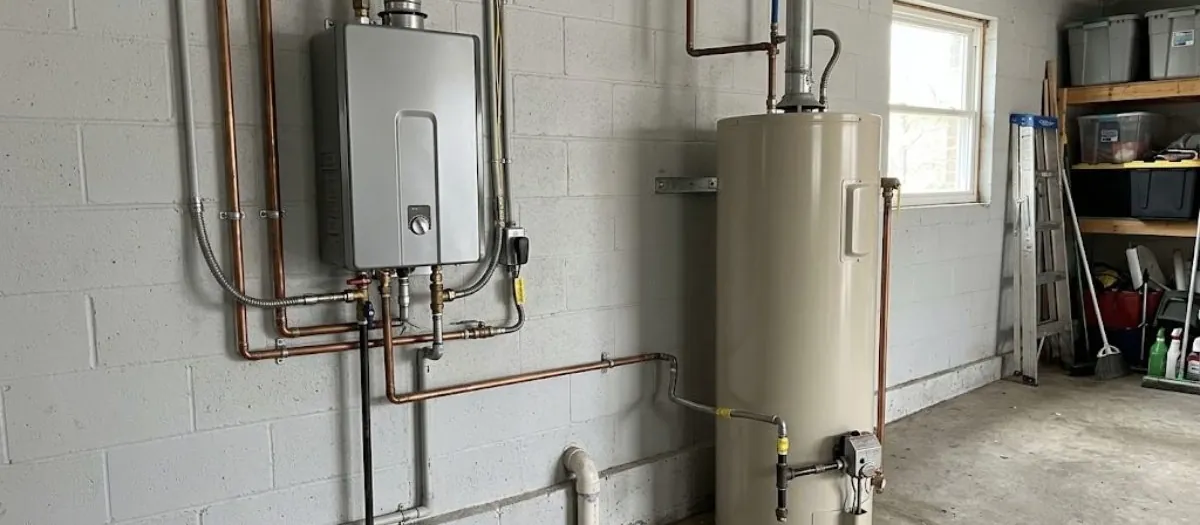
The short answer on tankless cost
A tankless water heater usually costs noticeably more to install than a same-size tank, and the gap comes from the work around the unit more than the unit itself. Gas piping, venting, condensate drainage and permits are where the surprises hide.
We do not print a single price because it would be wrong for most houses. What we can do is show you which pieces add cost, so you can read any quote you receive and ask the right questions.
What goes into the price
| Cost piece | Why it matters | How much it varies |
|---|---|---|
| The unit | Flow rating, gas or electric, condensing or not | Wide, by capacity and brand |
| Gas line | Tankless burns much more gas per hour than a tank | Little if the line is large enough, a lot if it must be upsized |
| Venting | Plastic vent through a wall or roof versus reusing a flue | Depends on route length |
| Condensate drain | High-efficiency units make acidic condensate | Small if a drain is near |
| Water side | New valves, a flush kit and sometimes a pressure check | Small |
| Permit and inspection | Required plumbing work in the city | Small, but real |
Ask any installer to price these pieces separately. A quote that says only "tankless installed" hides the part that changes most between houses.
Gas tankless versus electric
Gas units dominate whole-house installs because they deliver high flow without a huge electrical load. Electric tankless units can draw several times the current of a tank heater, and many older panels cannot support a whole-house electric model without an upgrade.
If your house has gas to the water heater now, the question is whether the meter and the pipe can feed a unit that burns far more per hour. A neighboring 1960s ranch and a newer build can have very different answers.
Why North Olmsted houses add cost
The Census survey profile puts the median North Olmsted home at 1966, with roughly 83 percent built before 1980. Houses from that era usually have a basement water heater in a corner with a metal flue shared with the furnace.
Moving to a tankless unit often means abandoning that flue, running a new vent and rerouting the gas. None of that is hard, but it adds hours. Our tankless water heater page lists the sizing and venting questions we ask before quoting.
The North Olmsted angle
The City of North Olmsted lists its plumbing code as the 2024 Ohio Plumbing Code, which is based on the 2021 International Plumbing Code, and the Building Division issues plumbing permits. Its application says the permit holder arranges inspections and asks for 24 hours notice. Contractors must be registered with the city before permits are issued, so ask your installer to confirm registration and who will pull the permit.
Operating costs and the payback question
Tankless units can use less energy than a tank because they do not heat water all day. Savings depend on how much hot water you use and what you pay for gas or electricity. A household that runs hot water in short bursts saves more than one that runs it constantly.
Do not rely on a payback promise from a brochure. Ask what the real efficiency rating is, how the unit performs with Cleveland-area winter incoming water, and what the annual flush costs. See the flushing section of the tankless water heater page for a maintenance picture.
Hard water and the flush
Cleveland Water's 2025 report lists hardness of 105 to 130 ppm with an average of 117. That is moderately hard, and scale builds inside a tankless heat exchanger. Plan on a descale flush about once a year, or follow the manufacturer schedule.
A water softener lowers that maintenance, at its own cost. Test your own tap, because the report describes the system, not your street. If your house is outside Cleveland Water, ask your utility for its report.
How to compare quotes
- Ask for the unit model, its flow rating and the temperature rise it is based on.
- Ask whether the gas line is staying or being upsized, and how many feet of new pipe are included.
- Ask where the vent will terminate and how it passes through walls.
- Ask whether permit and inspection are included and who pulls the permit.
- Ask what the warranty covers and whether a flush is required to keep it valid.
A quote that answers all five is more likely to match the invoice. Planning a swap near you? Our crews also work in Westlake and Fairview Park, where the same questions apply.
When a tank is the better choice
Tankless is not always the right answer. If the gas line is far too small, the vent route is awkward or the budget is tight, a new tank can be the sound choice. A high-efficiency tank or a hybrid unit may save energy without the venting changes.
The best advice we can give is to ask for both options priced side by side. If a company only offers one, ask why. For a failed unit that needs hot water tonight, see water heater replacement.
Questions to ask about the warranty
Warranties on tankless units usually split into parts for the heat exchanger and parts for everything else. The heat exchanger period is typically longer, but some makers void it if the unit is not flushed or if it is installed outside their instructions.
Ask for the warranty terms in writing before you sign. Find out whether labor is covered, who files the claim and whether registering the unit is required.
Codes behind the line items
Several cost lines exist because of code. The vent, the gas piping, the relief arrangement and the condensate drain are all inspected against the manufacturer instructions and the Ohio Plumbing Code, which is based on the International Plumbing Code (IPC).
Questions homeowners ask
Often, but it depends on use. A household with steady hot water use saves less than one with short bursts. Ask for the efficiency rating and your expected use.
Frequently yes. A tankless unit burns much more gas per hour than a tank heater, so the existing line may need upsizing. The installer measures the run and the meter capacity.
Many installs take most of a day. Conversions from a shared flue to a new vent can take longer.
The city says plumbing work needs a permit before it begins, and contractors must be registered. Ask the Building Division at 5200 Dover Center Road about your project.
It can be, with an annual flush and possibly a softener. Cleveland Water reports hardness of 105 to 130 ppm, so scale prevention matters.
It is drained, disconnected and removed as part of the swap. Confirm removal is in your quote.
Have a question that is not here? Call (440) 468-0237.